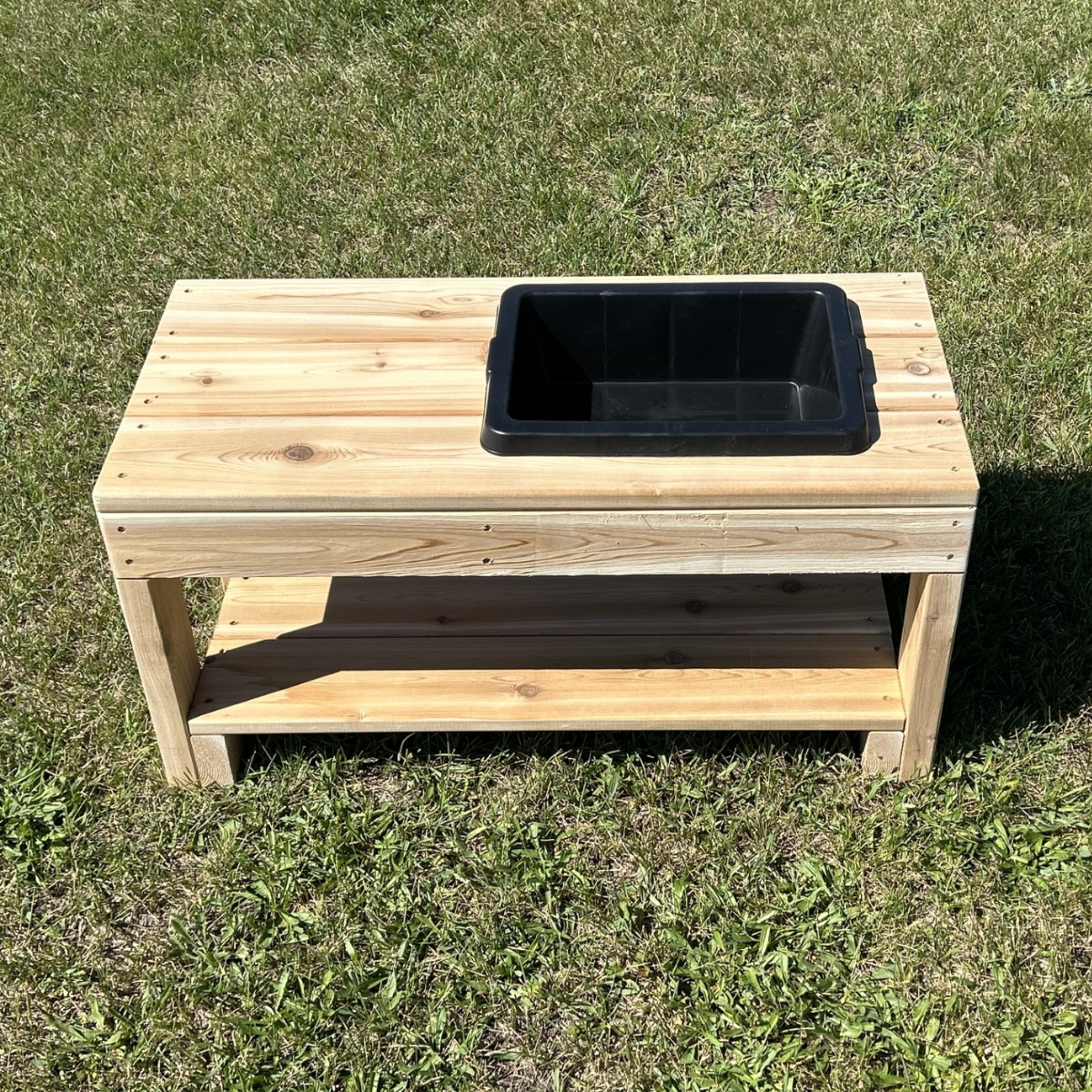
Big opportunities for messy, imaginative learning come in a perfectly sized package with the Tiny Mud Kitchen by Naturally Inspired Play. Designed exclusively for Scholar’s Choice by early years experts and handcrafted in Canada, this compact outdoor mud kitchen creates an inviting space for children to mix, scoop, pour, collect, create and pretend through hands-on, play-based learning.
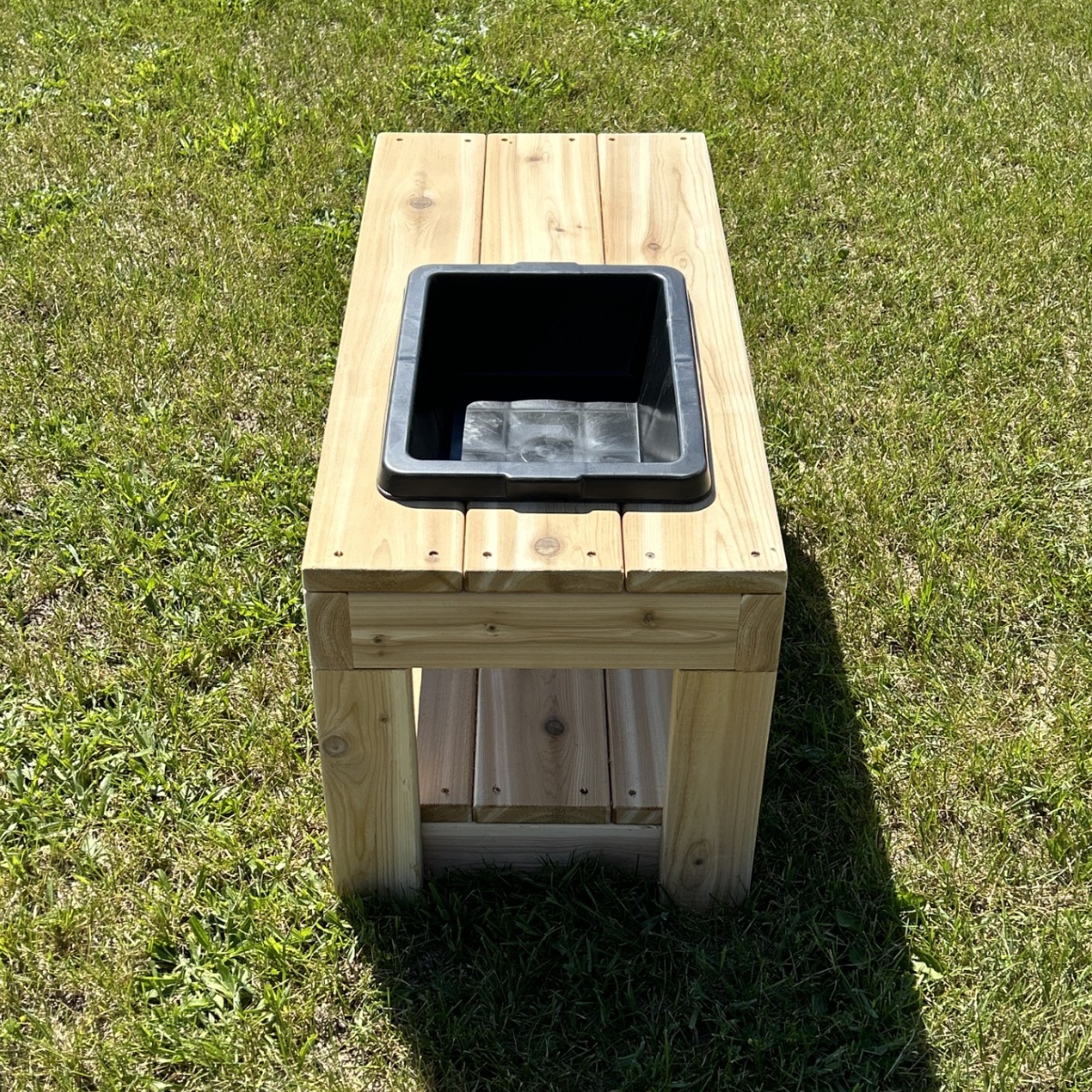
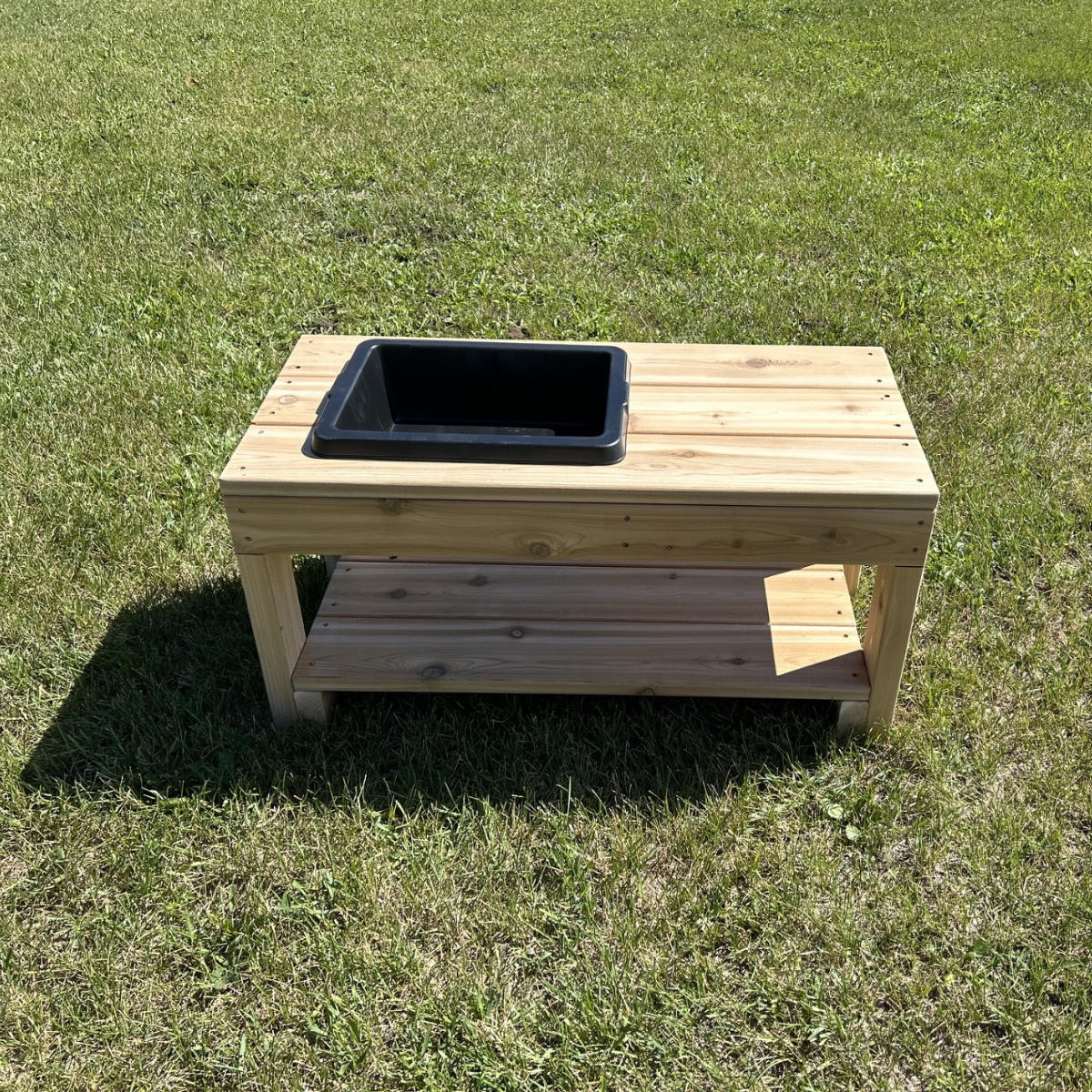
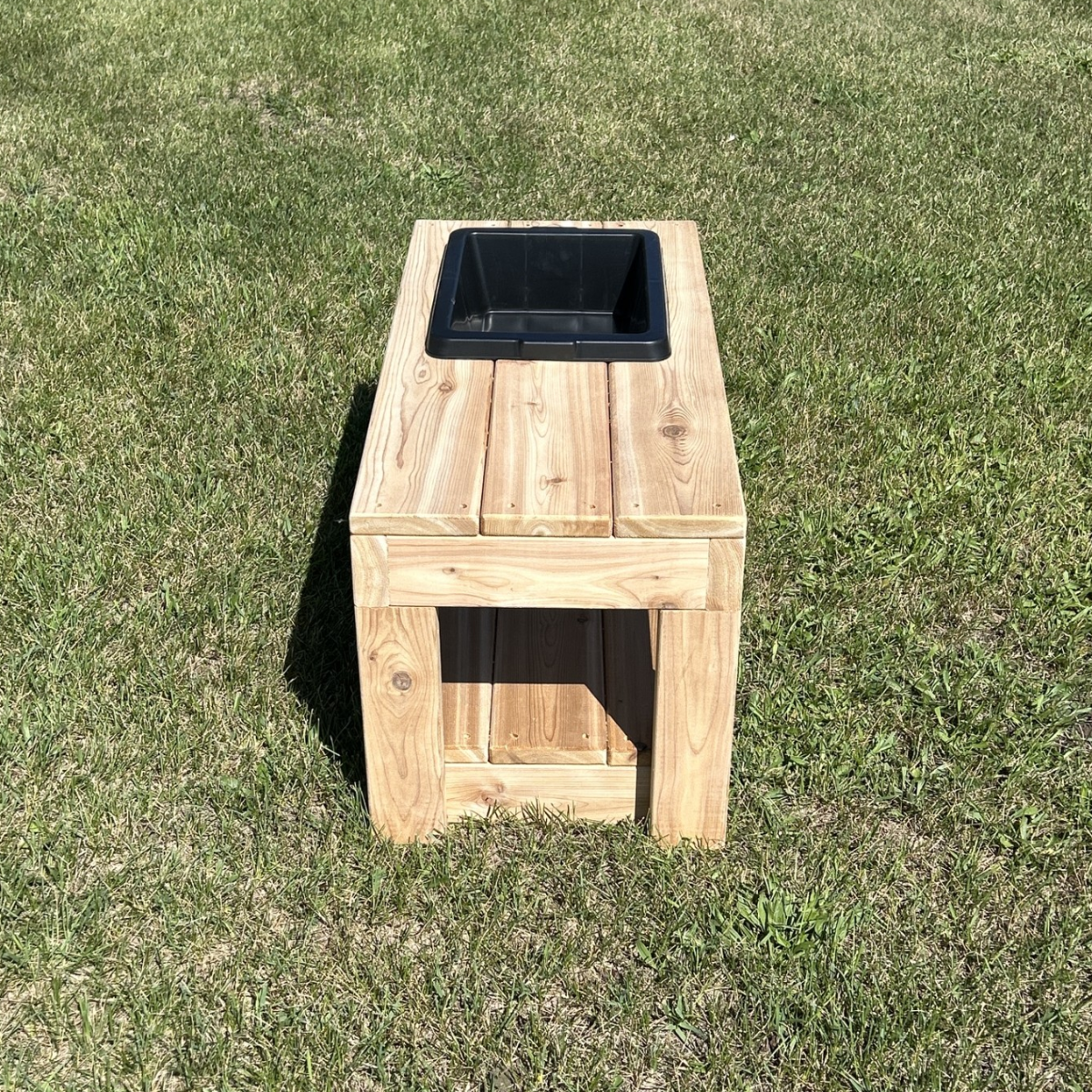
Thoughtfully designed for early learning environments, the Tiny Mud Kitchen features a recessed play basin, generous wooden work surface and lower storage shelf, providing children with everything they need to transform simple natural materials into meaningful play experiences. Its compact footprint makes it an excellent choice for childcare centres, preschool playgrounds and outdoor classrooms where space may be limited but educators still want to provide rich opportunities for sensory play, dramatic play and outdoor learning.
Add water, mud, sand, leaves, flowers, sticks and other natural loose parts, then invite children to take the lead. A bowl of mud can become chocolate cake, flower petals can become soup ingredients and stones can become freshly baked cookies. With no prescribed outcome, children are free to follow their curiosity, create their own stories and investigate materials in ways that are meaningful to them.
Mud kitchen play brings together sensory exploration, imaginative play, early science, mathematics, language and social-emotional development, making the Tiny Mud Kitchen a versatile addition to a play-based outdoor learning environment. Scholar’s Choice also identifies mud kitchen play as an opportunity for children to combine tactile exploration with creative cooking and dramatic play experiences.
Key Features
-
Compact mud kitchen design: Provides rich outdoor learning opportunities without requiring a large amount of playground space.
-
Recessed play basin: A deep removable-style basin area creates an inviting place for mixing mud, water, sand and natural materials.
-
Generous work surface: Gives children room to prepare, arrange, sort and create their imaginary recipes.
-
Lower storage shelf: Keeps pots, pans, bowls, scoops, loose parts and other mud kitchen accessories close to the play area.
-
Designed for sensory play: Encourages children to investigate different textures, temperatures, consistencies and natural materials.
-
Supports dramatic play: Easily transforms into a café, bakery, restaurant, potion station, nature kitchen or imaginary home.
-
Encourages nature-based learning: Children can incorporate leaves, flowers, sticks, stones, seed pods and other outdoor discoveries into their play.
-
Open-ended and child-led: Children decide what to make, how to use the materials and where their play will go next.
-
Ideal for early learning environments: Suitable for toddlers through kindergarten-aged children according to the current product listing.
-
Canadian made: Manufactured in Canada by Naturally Inspired Play.
-
Scholar’s Choice Exclusive: Designed exclusively for Scholar’s Choice.
Early Childhood Development Benefits
Mud kitchen play may look delightfully messy, but underneath the mud is a rich combination of developmental learning.
Sensory Development
Mud, water, sand and natural loose parts provide children with opportunities to explore texture, temperature, weight, consistency and change. Children can investigate what happens when materials are mixed, squeezed, poured or combined while engaging multiple senses at once.
Fine Motor Development
Scooping, stirring, pouring, transferring, pinching and collecting help strengthen the small muscles of the hands and fingers while developing hand-eye coordination and control.
Creativity & Imagination
There is no recipe to follow in a mud kitchen. Children invent their own meals, potions, stories and dramatic play scenarios, supporting creative thinking, symbolic play and imagination.
Early Math Learning
Mud kitchen experiences naturally introduce mathematical ideas as children count ingredients, compare quantities, fill containers and explore more, less, full, empty, heavy, light, capacity and measurement.
Early Science & Inquiry
What happens when water is added to dry soil? Why does one mixture pour while another sticks? Children can predict, experiment and observe change while developing early understandings of cause and effect, materials and scientific inquiry.
Language & Communication
Pretend cafés, kitchens and restaurants encourage children to talk about what they are making, explain their ideas, create menus, take orders and introduce new descriptive vocabulary.
Social-Emotional Development
When children cook and create together, they practise sharing materials, negotiating roles, communicating ideas and collaborating—important foundations for positive social development.
Mud Kitchen Play Ideas
Mud Pie Bakery
Provide bowls, spoons, muffin tins and natural decorations such as leaves, flowers and stones. Children can mix their mud recipes, decorate their creations and open an outdoor bakery.
Nature Soup
Go on a nature walk and collect leaves, grasses, flower petals, seed pods and sticks. Add water to the basin and invite children to create their own seasonal nature soups.
Outdoor Café
Add reusable plates, cups, utensils and pots and invite children to transform the Tiny Mud Kitchen into their own café or restaurant. Dramatic play can extend into menu making, taking orders and serving pretend meals.
Potion Making
Combine water with flowers, herbs, leaves, stones and other natural loose parts. Add scoops, jugs and measuring containers so children can invent and name their own imaginative potions.
Scoop, Pour & Measure
Fill the basin with water, sand or another sensory material and provide funnels, measuring cups, ladles and containers. Encourage children to compare how much different containers can hold.
Mud Science
Invite children to experiment with different ratios of soil and water. What happens when more water is added? What happens when more soil is mixed in? Encourage prediction, experimentation and descriptive language.
Nature Sorting
Use the work surface to sort outdoor discoveries according to size, colour, texture or type. Children might organize stones, sticks, leaves, flowers or pinecones before incorporating them into their play.
Seasonal Mud Kitchen
Change the invitation throughout the year. Explore flowers and fresh leaves in spring, water and herbs in summer, colourful leaves and seed pods in autumn, or snow and ice during the winter.
Why Educators Will Love It
The Tiny Mud Kitchen provides many of the learning opportunities of a larger dramatic play kitchen in a smaller, versatile format. Its compact design makes it particularly valuable for childcare centres and early years programs looking to maximize their outdoor learning space.
The combination of an integrated basin, usable countertop and lower storage shelf means educators can easily refresh the experience with different materials and provocations. One day it can support mud play; the next it can become a nature investigation station, potion lab, outdoor café or sensory table.
Because the play is open-ended, the Tiny Mud Kitchen can evolve alongside children's interests rather than being limited to one specific activity. Scholar’s Choice highlights mud kitchens as a resource for year-round outdoor exploration that can support sensory, cognitive, creative and social learning.