


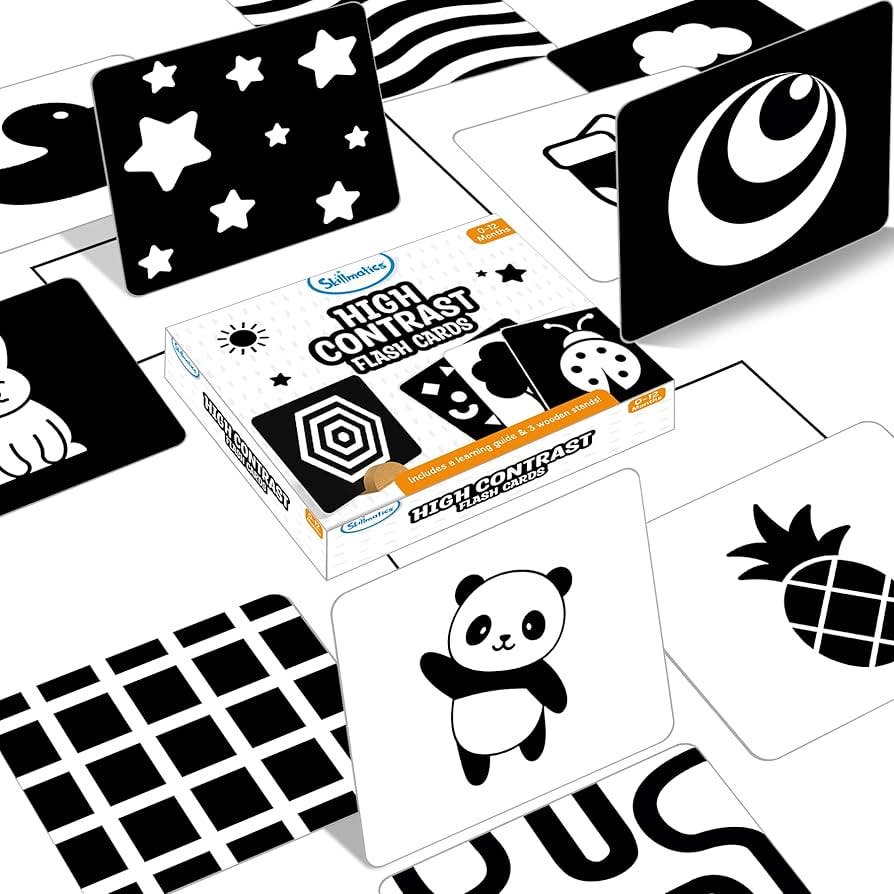
Cognitive Growth
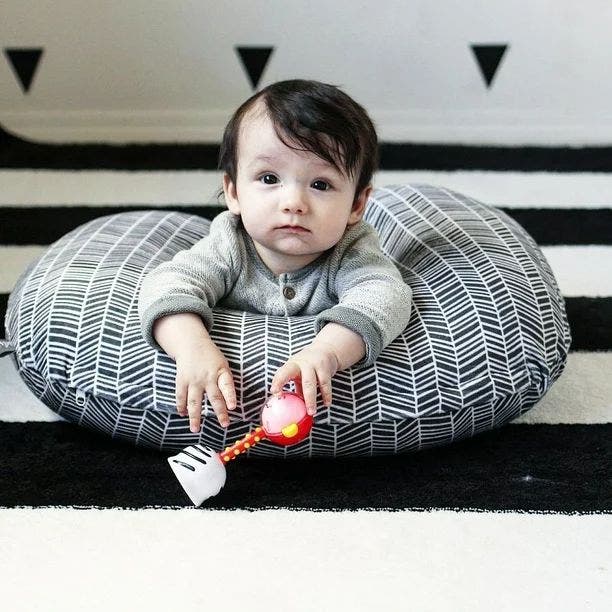
The simplicity of high-contrast toys helps to prevent sensory overload, allowing infants to focus and process information effectively. This focused attention is crucial for cognitive development as it lays the groundwork for memory, problem-solving, and later language acquisition.
Encouraging Exploration
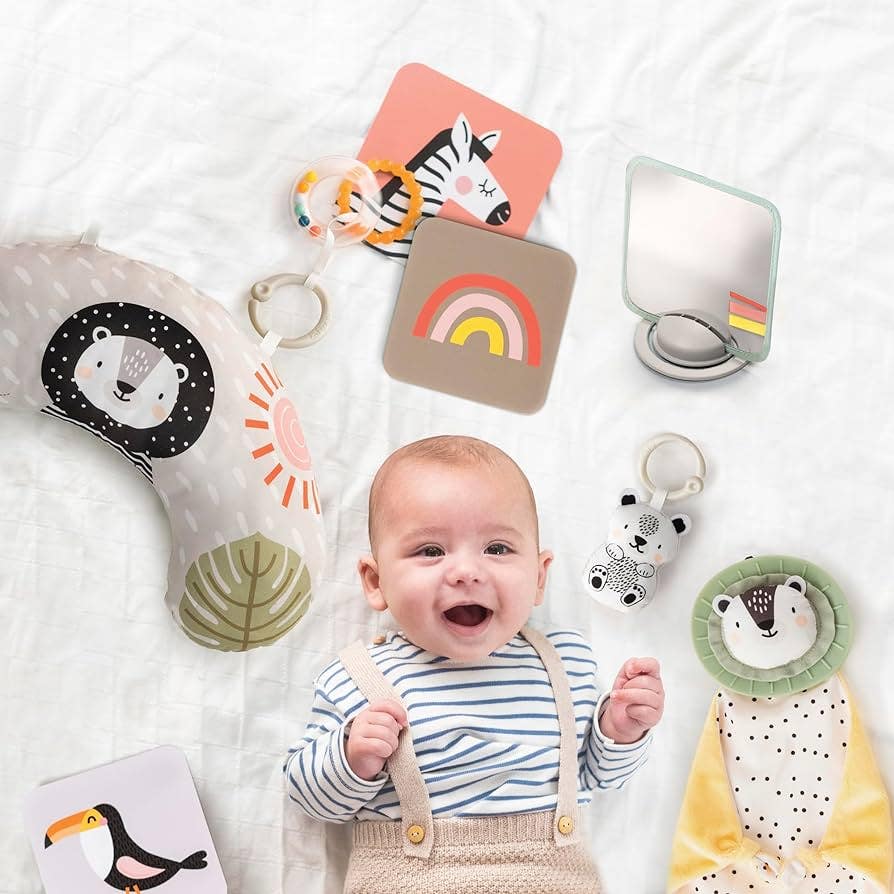
High-contrast toys are not just visually stimulating; they often encourage touch and interaction. As infants reach out to grab or swipe at these toys, they engage in the early stages of motor skill development. This exploration helps strengthen their muscles and improves coordination, which are key components of physical development.
Emotional Comfort
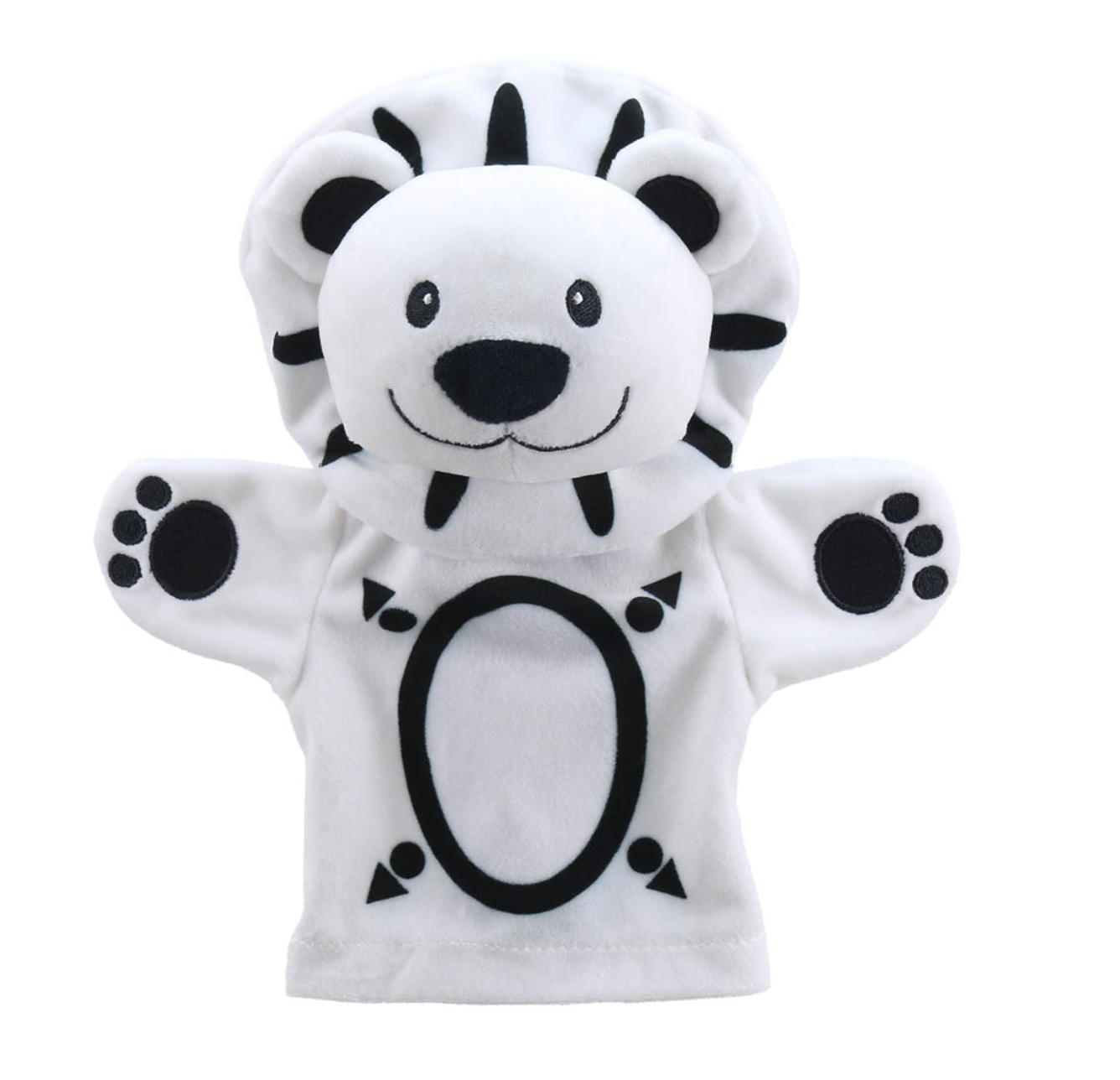
The familiar patterns and predictable nature of high-contrast toys can offer comfort to infants. These toys can become a source of reassurance in new environments, helping to ease the stress of unfamiliar situations and promoting emotional security.
How to Incorporate High-Contrast Learning Resources
Incorporating high-contrast learning resources into your infant’s daily routine is easier than you might think. Here are some practical ways to do so:
-
Books: High-contrast board books with simple black-and-white images are perfect for early reading sessions. These books not only captivate an infant’s attention but also introduce them to the rhythm of language through repeated exposure.
-
Play Mats: Choose play mats with bold, contrasting patterns that your baby can lie on and observe. These mats often include tactile elements, adding an extra layer of sensory stimulation as your infant explores different textures.
-
Mobiles: Hang a high-contrast mobile above your baby’s crib or changing table. The moving patterns will encourage visual tracking, a skill that is essential for later reading and writing.
-
Soft Toys: Soft toys featuring high-contrast patterns can be placed within your baby’s reach to encourage them to grasp and explore. Look for toys that include different textures or sounds to enhance sensory exploration.
The Role of Sensory Play in Early Childhood Development
Sensory play, particularly with high-contrast toys, plays a crucial role in early childhood development. It engages multiple senses at once, which helps to build neural connections in the brain. These connections are vital for processing and responding to sensory information, which is a foundation for learning and interacting with the world.
In addition, sensory play encourages curiosity and problem-solving as infants explore their environment. Whether they are batting at a mobile, chewing on a soft toy, or simply gazing at the patterns in a book, they are actively learning and developing essential skills that will support their growth into toddlerhood and beyond.
Conclusion: Building a Strong Foundation for Growth
As parents, the choices you make in the early months of your child’s life have a lasting impact on their development. By selecting high-contrast toys and learning resources, you are providing your infant with the tools they need to explore their world, develop their senses, and build the cognitive and motor skills that will serve them throughout their lives.
High-contrast toys are more than just visually appealing—they are a critical component of your child’s early development, supporting everything from visual acuity to cognitive growth. By incorporating these toys into your daily routine, you are laying the foundation for a lifetime of learning and exploration.
As you embark on this journey with your child, remember that every moment of play is an opportunity to nurture their growth. Embrace the simplicity and power of high-contrast toys, and watch as your infant begins to discover and interact with the world around them in new and exciting ways.
See all our high contast toys and resources online here
Make sure to tag us on social media if you try any of our ideas and follow us for more play based learning activites, process art and craft ideas on social media @ScholarsChoice on Facebook, Instagram and Pinterest