For many early childhood educators, incorporating engaging and enriching play activities into their curriculum is a top priority. One of the most captivating and beneficial play settings you can offer is a mud kitchen. This simple, outdoor play setup not only encourages children to get messy and have fun but also provides a rich array of developmental benefits. In this blog post, we'll delve into the advantages of mud kitchen play and how it supports play-based learning through sensory experiences, outdoor exploration, and messy play.
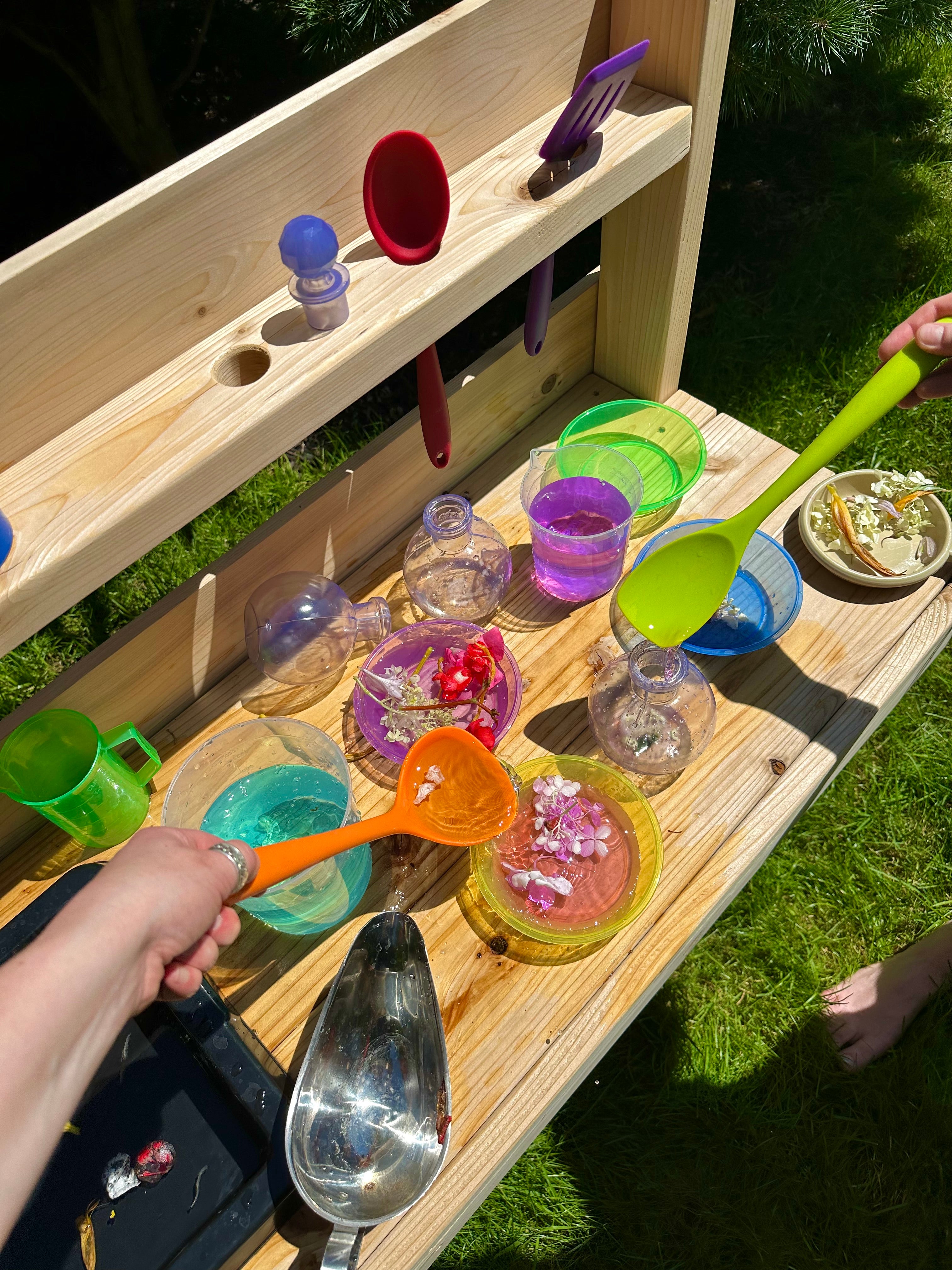
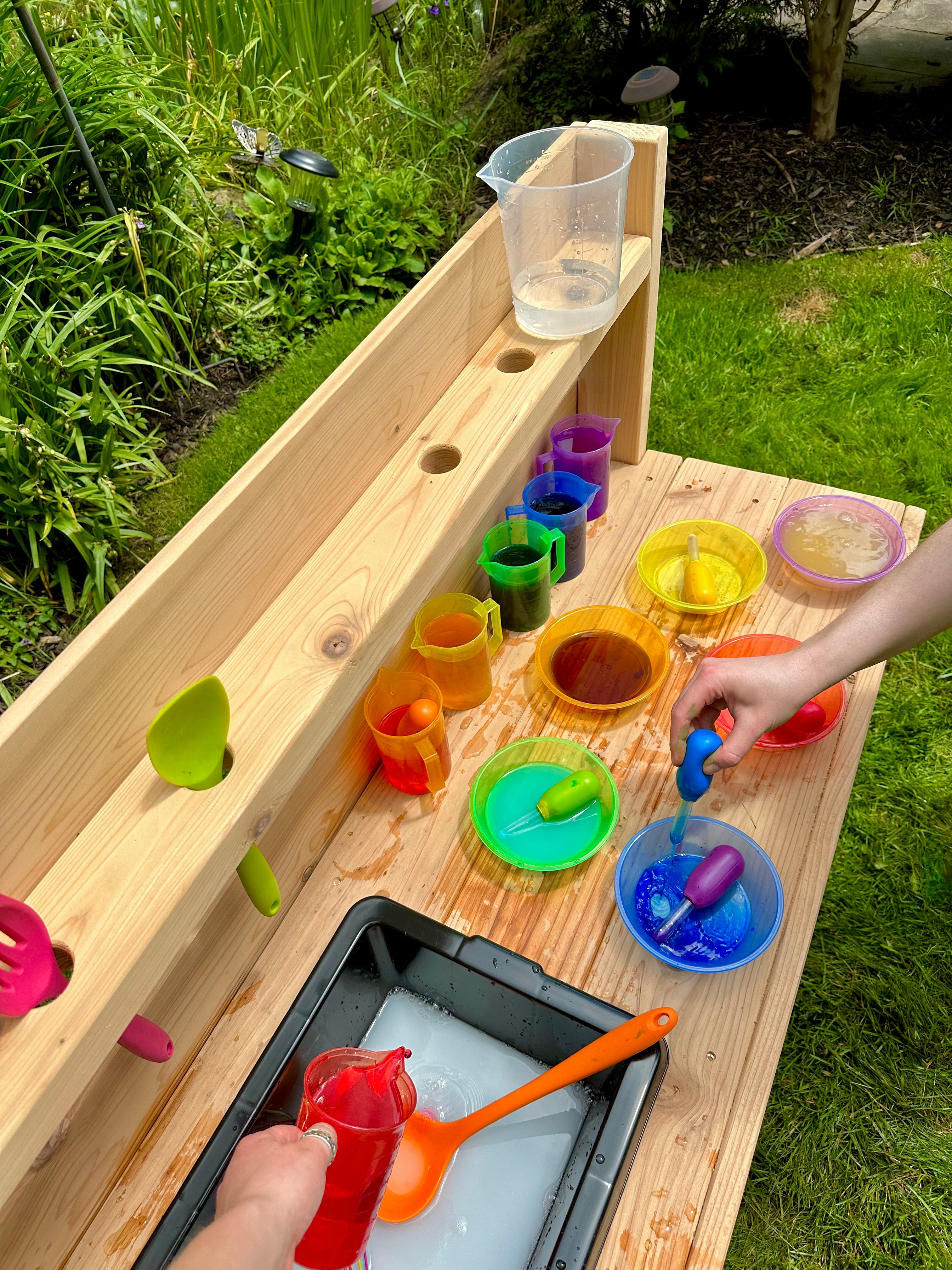
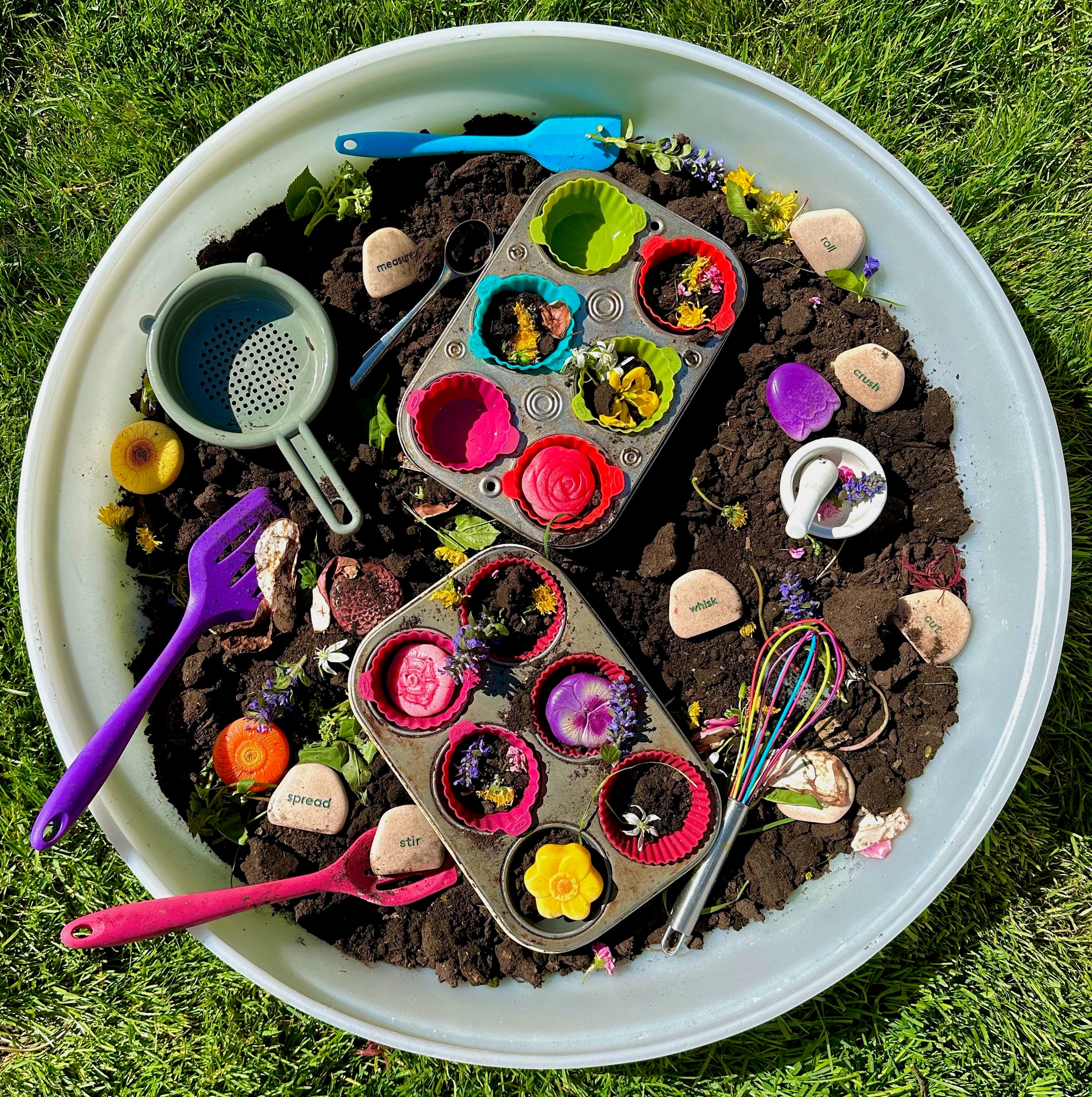
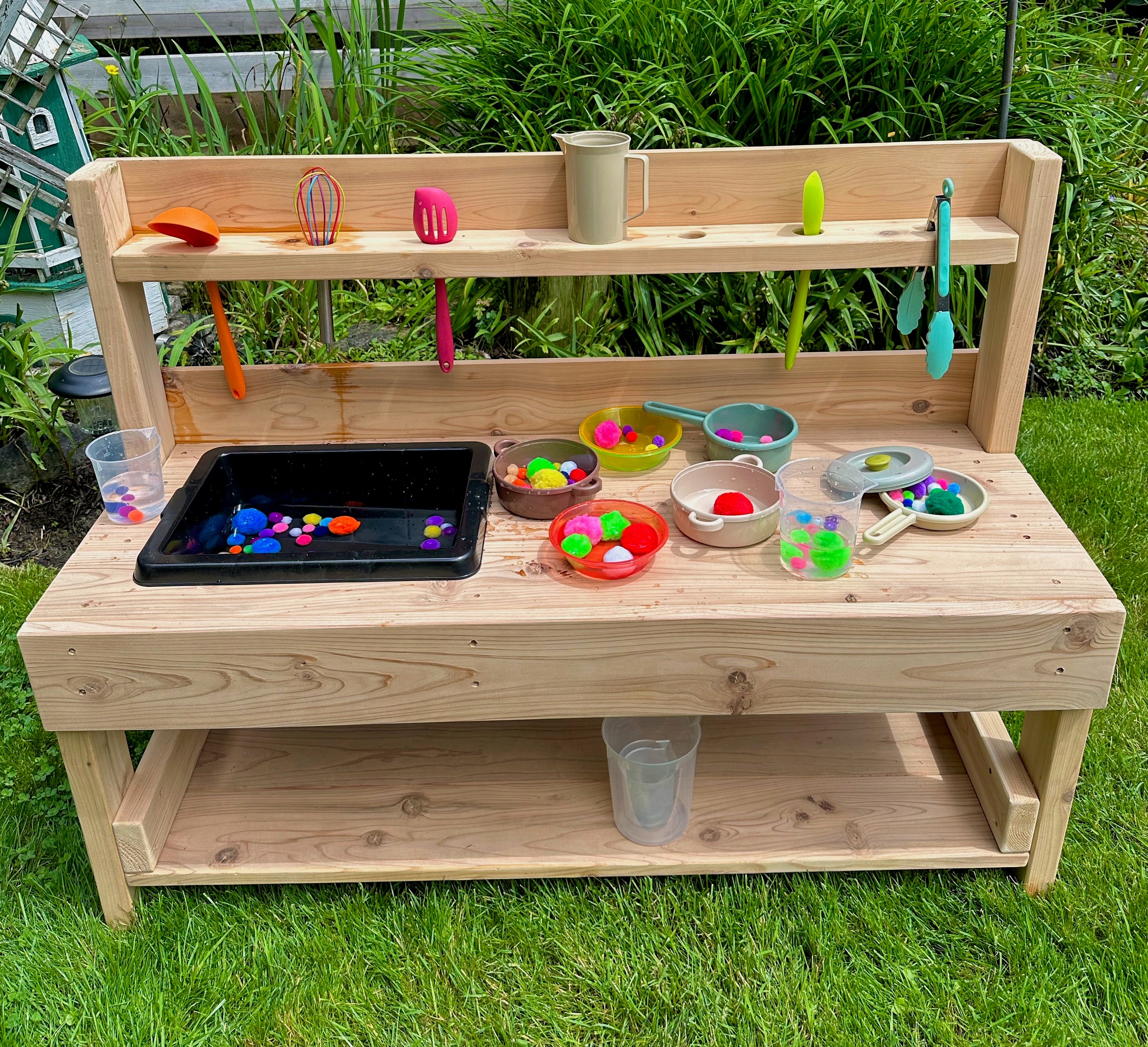
A mud kitchen involves an outdoor play area equipped with pots, pans, utensils, water, and, most importantly, mud. This setup mimics a real kitchen, allowing children to 'cook' and serve their muddy creations. This form of play is a fantastic sensory activity that offers children the tactile experience of mud combined with the creative freedom of cooking
Cognitive and Language Development

Mud kitchen play is a hotbed for cognitive growth. As children measure, mix, and pour, they engage in basic math and science concepts. This type of play naturally introduces them to measurements, volume, and cause and effect (e.g., adding water to dirt creates mud). Additionally, as children role-play in their mud kitchen, they develop language skills. They learn to follow multi-step directions, expand their vocabulary with new words, and practice articulating their thoughts as they explain their cooking process or negotiate roles and tools with peers.
Enhancing Fine Motor Skills

The act of scooping, stirring, and pouring in a mud kitchen is excellent for developing fine motor skills. These activities help children build hand-eye coordination and manual dexterity, which are essential for academic tasks such as writing, cutting, and drawing. As children manipulate small kitchen tools and natural materials, they refine their grasp and control, strengthening the muscles in their hands and fingers.
Fostering Creativity and Imagination

Mud kitchen play offers endless opportunities for creative expression. Children use their imaginations to invent recipes, create unique dishes, and engage in elaborate role-playing scenarios. This type of imaginative play is crucial for cognitive development, as it encourages children to think abstractly and solve problems creatively. Moreover, it allows them to express themselves and build confidence in their ideas and abilities.
Â
Social Skills and Emotional Development

Collaborating in a mud kitchen helps children develop important social skills. They learn to share resources, take turns, and work together to create mud meals. These interactions foster teamwork and help children understand the value of cooperation and communication. Additionally, mud kitchen play can be incredibly soothing and therapeutic. The sensory experience of handling mud can help regulate children's emotions and reduce stress, providing a calming effect amidst their busy play schedules.
Implementing Mud Kitchen Play in Your Learning Environment
Setting up a mud kitchen is relatively simple and can be tailored to fit any outdoor space. Here are some tips to get started:
Mud kitchen play is more than just a fun outdoor activity, it's a comprehensive educational tool that supports a wide range of developmental areas. By integrating a mud kitchen into your play-based curriculum, you provide children with a joyful and enriching environment that stimulates their senses, enhances their cognitive abilities, and nurtures their emotional and social development. Let's embrace the mess and see where their imaginations take us!
Mud kitchen play is a hotbed for cognitive growth. As children measure, mix, and pour, they engage in basic math and science concepts. This type of play naturally introduces them to measurements, volume, and cause and effect (e.g., adding water to dirt creates mud). Additionally, as children role-play in their mud kitchen, they develop language skills. They learn to follow multi-step directions, expand their vocabulary with new words, and practice articulating their thoughts as they explain their cooking process or negotiate roles and tools with peers.
The act of scooping, stirring, and pouring in a mud kitchen is excellent for developing fine motor skills. These activities help children build hand-eye coordination and manual dexterity, which are essential for academic tasks such as writing, cutting, and drawing. As children manipulate small kitchen tools and natural materials, they refine their grasp and control, strengthening the muscles in their hands and fingers.
Mud kitchen play offers endless opportunities for creative expression. Children use their imaginations to invent recipes, create unique dishes, and engage in elaborate role-playing scenarios. This type of imaginative play is crucial for cognitive development, as it encourages children to think abstractly and solve problems creatively. Moreover, it allows them to express themselves and build confidence in their ideas and abilities.
Collaborating in a mud kitchen helps children develop important social skills. They learn to share resources, take turns, and work together to create mud meals. These interactions foster teamwork and help children understand the value of cooperation and communication. Additionally, mud kitchen play can be incredibly soothing and therapeutic. The sensory experience of handling mud can help regulate children's emotions and reduce stress, providing a calming effect amidst their busy play schedules.